An Invitation to Becoming a Legacent
Arriving in this season
I've never been this age before.
I say it often, half as a joke and half because it's true.
Every birthday puts me somewhere I haven't been, carrying a lifetime of wandering and wondering, more than I used to, asking, "What all of it is for?"
I've spent most of my working life as an adult educator and facilitator, and a good part of it outdoors, involving people in remote/wilderness settings. If those years taught me anything, it's that education, when accompanied by learnation—as a considered domain with education (yes, acknowledging learning is complementary with educating)—do I flow in what I be-have-do!
To be sure, learning is not in educating. Learning walks hand-in-hand with educating.
Situation
Once people reach their sixties and beyond, there's a word waiting for some of them.
That word is elder, and I respect it, though it leaves something unsaid.
It tells you where a person stands as recognized by others in a formal sense.
If you're reading this, you may be like many of the olders I've spoken with and supported, Experience-Holders who value learning and know a good deal about educating approaches like mentoring.
And yet, for shaping and sharing their experience, expertise, and education in their second fifty, they feel stalled.
The path of recognition
As elders__a community sees something in them, usually over many years, and gives them that name. It might be a congregation, a family, or the people they've worked beside for decades. The recognition comes from others. It reflects trust earned slowly.
In Indigenous communities, being an elder carries real responsibilities. The community reveals this naming, it's never claimed by the person.
So I want to be clear that nothing I'm describing here replaces or borrows the role of elder.
I've known people recognized as elders, and I've seen what it made possible for those around them.
However, there are olders (Experience Holders) who carry a great deal and are never named.
The path of selecting
There's another path, and it's the one I've selected.
I call it becoming a Legacent, a word I made by joining legacy with docent.
A docent is the person in a museum who walks you through a collection they don't own, pointing out what's there and why it matters.
That's close to what I'm doing with my experience: hold it as a steward and walk others through it while I'm still around to be part of what comes next.
Nobody confers this name.
YOU think it over, and you decide.
For me, the decision grew out of my own circumstances.
I'm a solo-ager, without family or an organization around me that might one day name me an elder.
I was looking for a way to describe myself that would also hold for every older in the same position.
Legacent was the word that fit.
Three questions helped me settle into it, and I keep coming back to them.
_What am I becoming at this age, now that the roles that used to define me have loosened their grip?
__Whom can I serve, and what do I actually have that would encourage them?
___And what would thriving look like now if it meant passing things along rather than holding on?
There's no single correct answer to any of these. There isn't meant to be!
However, there are YOUR answers!
My answers come from trails and classrooms, and many years sitting in circles and rectangular boxes with adult learners. Yours will come from life lived and living__
In deciding this path, select Legacent with intention and start-sense-stand-shape-share* now, instead of leaving it all to be sorted out after you're gone. Pass along the messages instead of creating a mess.
* Link is to the July 2026 Legacent Magazine, see page 3
Here, let me add legacy—as in, live the legacy you intend to leave.
Where legacy is about the useful whats you gift others so they can learn from you, you from them, and together eco-create something you could not create alone.
The useful whats are your time, effort, and/or money__
Legacy conversations often arrive in the past tense, as something talked about later and or something that is left behind.
Yet, a Legacent lives legacy forward,
from what they've lived,
for those coming along, and with them,
where youngers can ask questions
and the conversation of conservations
goes both ways.
Doug is a good example. He's a mentor leaning into work as a grief mentor.
He isn't part of an established community that might one day call him an elder, and he didn't wait for one.
He declared himself a Legacent, building on the mentoring he was already doing.
To Doug, the two fit together naturally, since mentoring supports becoming/serving as a Legacent.
What he's learned through loss, and because of it, is now something he holds in trust and offers to others while he's here to shape and share it.
You can meet Doug here!
Where the paths meet
I don't see the older as elder or as Legacent paths as competing.
I'd be uneasy about setting them up that way.
They are two paths into the same season.
Elder is a recognition other people give you, while Legacent is a selection you make for yourself.
They answer different questions, so there's nothing stopping a person from holding both.
An elder might decide to become a Legacent and put the trust they've already earned to deliberate use with youngers looking for guidance from "other places."
A Legacent might, in time, be recognized as an elder by the people they've served.
Plenty of olders will only ever walk one of these paths, and that's fine too.
What matters! This awareness, for this season of your life, has a path if you want one.
If recognition has come your way, I honour it.
If it hasn't, you don't need anyone's permission to share what you've learned via the educating approach you use. THAT WRITTEN: Do no harm to self or others!
An invitation to walk with me
So consider this an invitation, and a WELLcome.
I'm walking the Legacent path, and I'd rather not walk it alone.
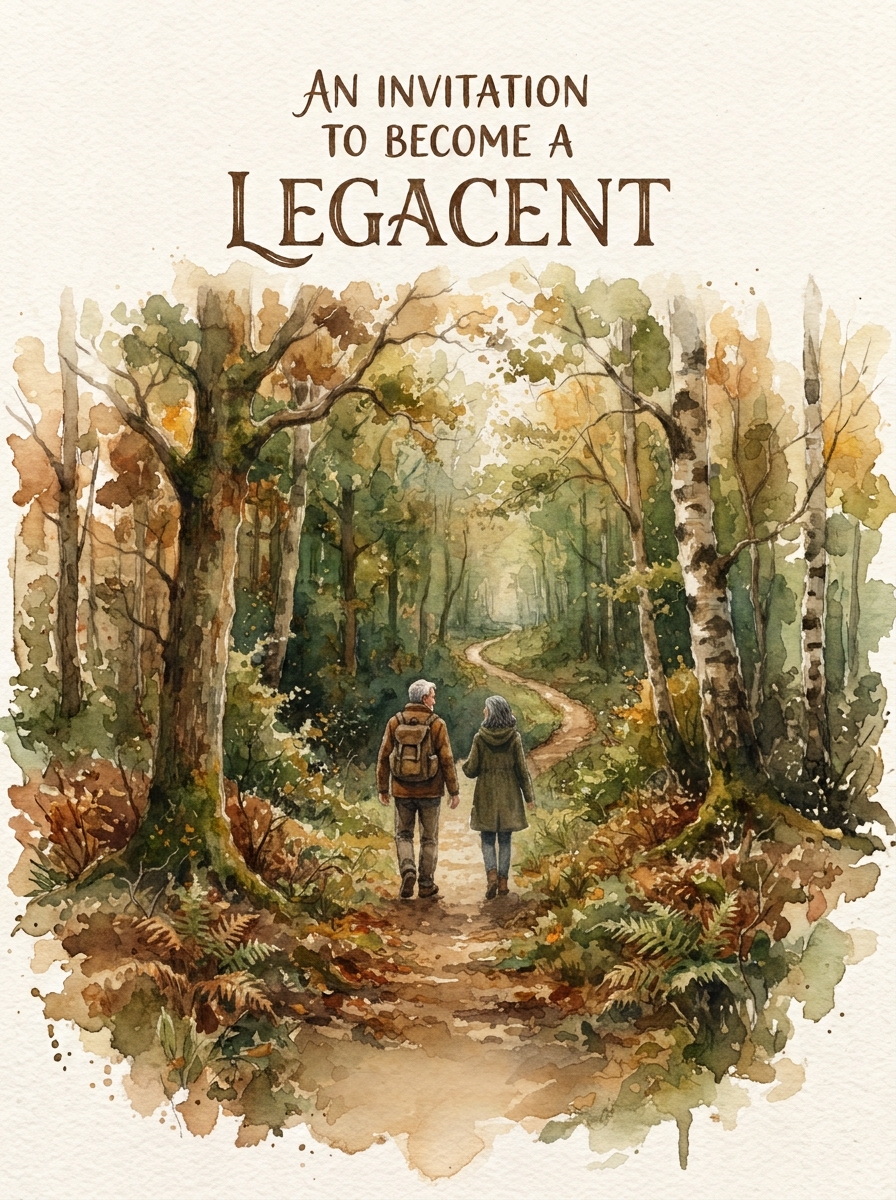
When I picture where it leads, I see a clearing in the forest, the kind of place people reach by their own trails and then sit for a while, around a fire or on benches, talking about what they've carried in with them.
Nobody owns a clearing like that. People come, share what they've brought, and usually leave with something they didn't have before.
If you're an older who's been wondering what your experience is for, I'd like you to sit with those same three questions alongside me: what you're becoming, whom you might serve, and what thriving could look like for you now. You don't need answers yet, only a willingness to ask the questions in good company.
You might already be an elder, or you might never be called one.
Either way, what you know came to you through a lot of other people over a lot of years.
It's not ours to keep.
Holding it as a steward, and passing it on while we're still here to see where it goes, seems to me the best use this season offers.
I ask you'll walk with me.
If you'd like to take a first step, I offer a Legacy Conversation about becoming a Legacent.
In 45 minutes together, we explore your aging journey, the experiences that have shaped you, your mentoring potential, and the legacy you want to keep creating. You leave with a recording and transcript of our conversation, so that you can return to what came up and decide what's next.
You can request your Legacy Conversation at wellthmovement.com/legacy-conversation.
The next step is Legacent Map, a 90-minute session where we work out together how you might become/serve as a Legacent. If you already know the challenges, values, and stories linked to legacy and want to structure your projects and/or contributions, grab a Legacent Map session NOW.
To the whiteboard!
Begin Your Legacy Conversation
Your experience carries stories, lessons, and insights that deserve to be explored.
A Legacy Conversation helps you reflect on your journey, curate what matters, and discover how your lived experience can become a meaningful contribution.
In 55 minutes, we will explore your aging journey, your defining experiences, your mentoring potential, and the legacy you want to continue creating.
You receive a recorded conversation, video, and transcript to help you reflect on what emerges.
Start your Legacy Conversation today — and discover what your experience is ready to contribute.
Create Your Legacent Map
Your experience contains patterns, possibilities, and pathways waiting to be mapped.
A Legacent Map Making Conversation helps you transform decades of lived experience into a practical contribution map using the MAKES MAPPS framework.
In 90 minutes, you will begin mapping your knowledge, actions, engagements, stories, and future pathways.
You receive your personalized map, video recording, and transcript as a foundation for your next contribution.
Create your Legacent Map today — and explore tomorrow through what you already know.
Consider this strategic distinction between the two offers:
Legacy Conversation = Discover what matters. More here
Legacent Map Making = Design what comes next. More here
Together, they create a natural pathway:
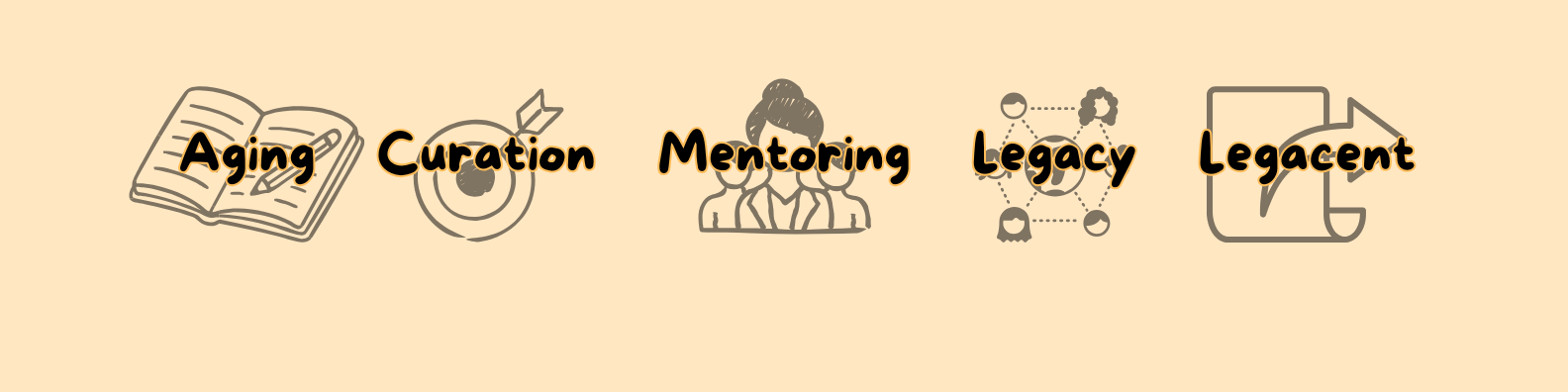
Aging → Curation → Mentoring → Legacy → Legacent
The first helps You understand your story.
The second helps You draft the map that turns your story into contribution.
Comments are appreciated_ What questions-comments would you like to share? What can we improve, focus and/or strengthen with this article?
When you provide your email--it is for us to chat about your message--we will NOT add you to any list. Period!


To receive email updates on additions to the Blog
place the word BLOG in the comments. That simple!
You'll receive emails about the Blog ONLY!
Also, you can ask questions - share a comment - pass along a funny.
One Year, Three Legacents Moving In In October 2025, I sat with
Legacy After 60: The First Aid of Living Legacy with Clarity, Caring,
Legacy After 60: The First Aid of Living Legacy with Clarity, Caring,
Welcome to Legacent_the online magazine weaving the topics legacy, experience, education, safety,
The Matrix Growing One Tree, One Intention, One Legacy Metaphorical story A
The Matrix Growing One Tree, One Intention, One Legacy Metaphorical story A